

Why trials go unattended
Most no-shows are not a decision. The person meant to come, then the day filled up, the nerves grew or the details got lost. That is good news, because forgetting and hesitation can be fixed with good follow-up, while a lack of interest cannot.
Look at what happens between the booking and the visit. Every gap in that stretch, such as a slow confirmation or silence for days, is a chance for the visitor to drift away.
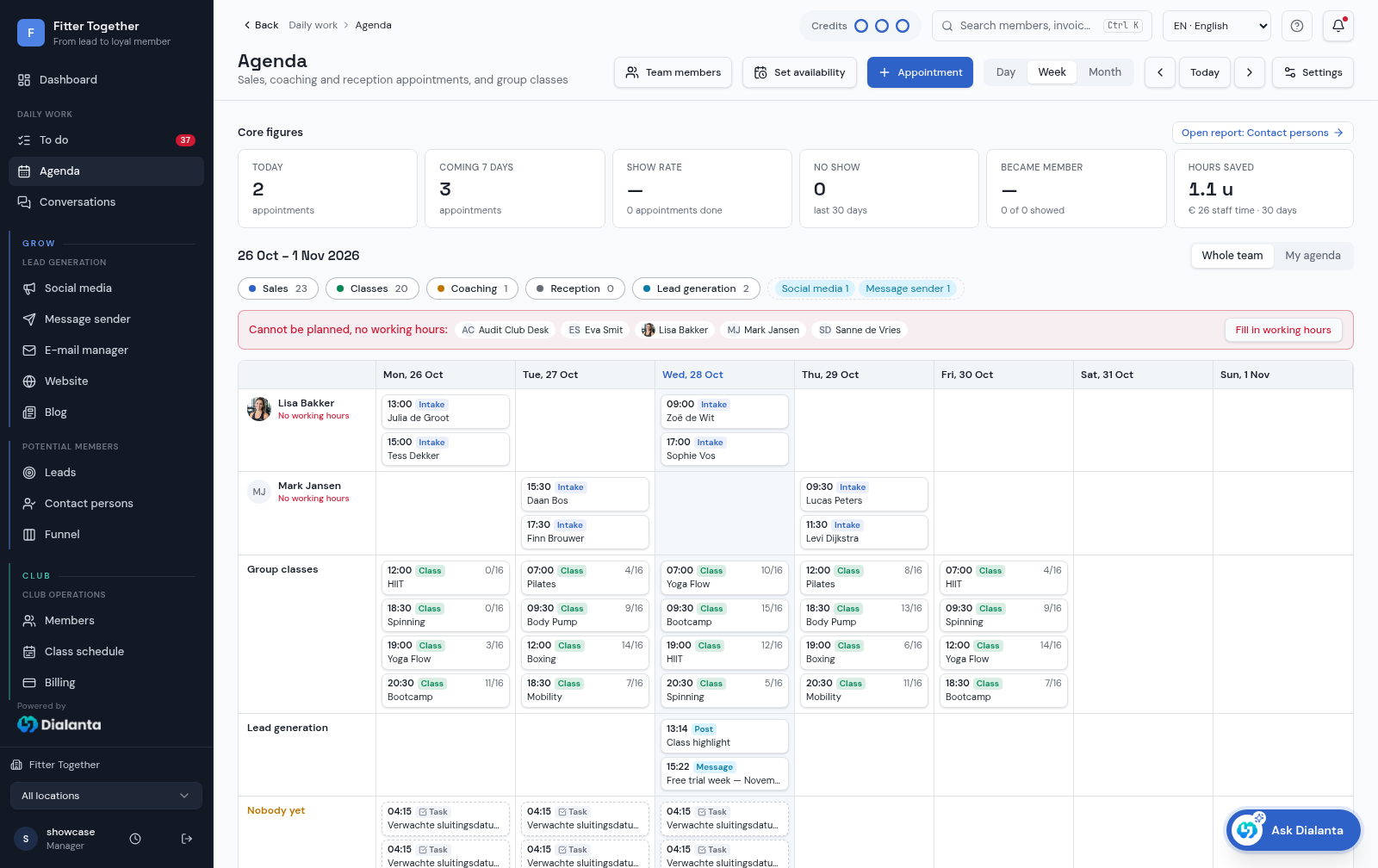
In Dialanta, this is what Agenda is for.
Confirm within minutes
The moment someone books a trial, they are most interested. Confirm the trial straight away, in the same minutes as the booking. A confirmation that arrives hours later feels like an afterthought and gives the visitor time to cool down or look at another club.
Keep the confirmation short and useful. Say who will welcome them, the day and time, where to park or enter, and what to bring. Add one clear way to reply or reschedule. When the visitor knows exactly what to expect, the visit feels easier and less like a leap into the unknown.
A confirmation also shows how your club works. If it arrives fast and sounds like a real person, the visitor expects the same level of care in the gym.
Remind on the channel people read
Most people read a WhatsApp message within minutes, while an email can sit unread for days. For trials, a WhatsApp reminder is often the most reliable way to reach someone. Use the channel your leads actually answer on, and ask which they prefer when they book.
Send two reminders: one the day before and one about two hours before the trial. The first lets people plan their day. The second catches the ones who forgot or are about to cancel in their head. Keep both friendly and short, and repeat the time and place.
- Day before: remind them of the time, the location and who they will meet.
- Two hours before: a quick note that you look forward to seeing them, with the address.
- Always invite a reply, so a question or change reaches your team early.
Call before the visit
A short personal call is the step that changes the most. In one or two minutes, a team member can welcome the visitor, ask what they want to achieve and answer small worries, such as not knowing what to wear or feeling nervous about the first visit. Someone who has spoken to a real person is much more likely to feel expected.
Keep the call light. It is not a sales talk. The goal is to make the visitor feel welcome and to confirm that the time still works.
Make rescheduling easy as well. Some people simply cannot come, and a trial moved to another day is better than a no-show. Put a clear way to change the time in every message, and make it as easy as answering one line. A visitor who can reschedule in seconds will usually do that instead of staying silent.
Finally, measure show-up per source. Compare how many booked trials actually arrive from your website, ads, social media and referrals. Sources with many bookings but low show-up need extra attention, for example a faster confirmation or a call. Without this view, you cannot tell which step helps and which does not.
Check what happens after the visit
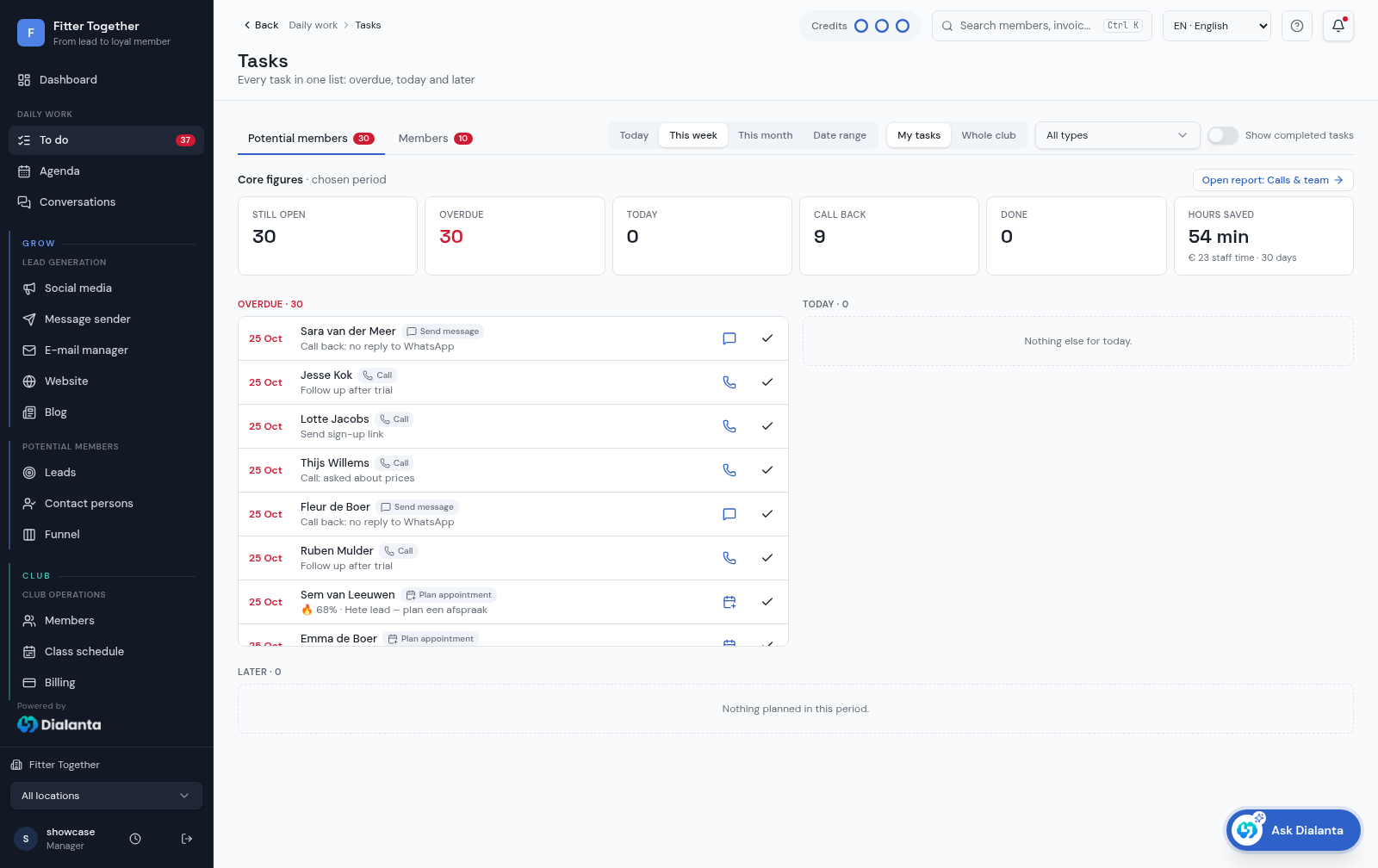
A no-show is not the end. Contact the person soon after, without blame, and offer a new time. Many people feel embarrassed and will not reply unless you make it easy.
Record why someone did not come. Over time, patterns show up: certain days, certain sources or certain times of day that lose more visitors than others. Use those patterns to change your own process, such as when you send reminders.