

Why missed calls cost you leads
A lead who calls and gets no answer often tries another club. Coaches on the floor cannot always pick up, and the desk is not always staffed. The lead does not wait; they call the next gym on the list.
Missed calls are also hard to see. Nobody counts the people who gave up, so the loss stays hidden.
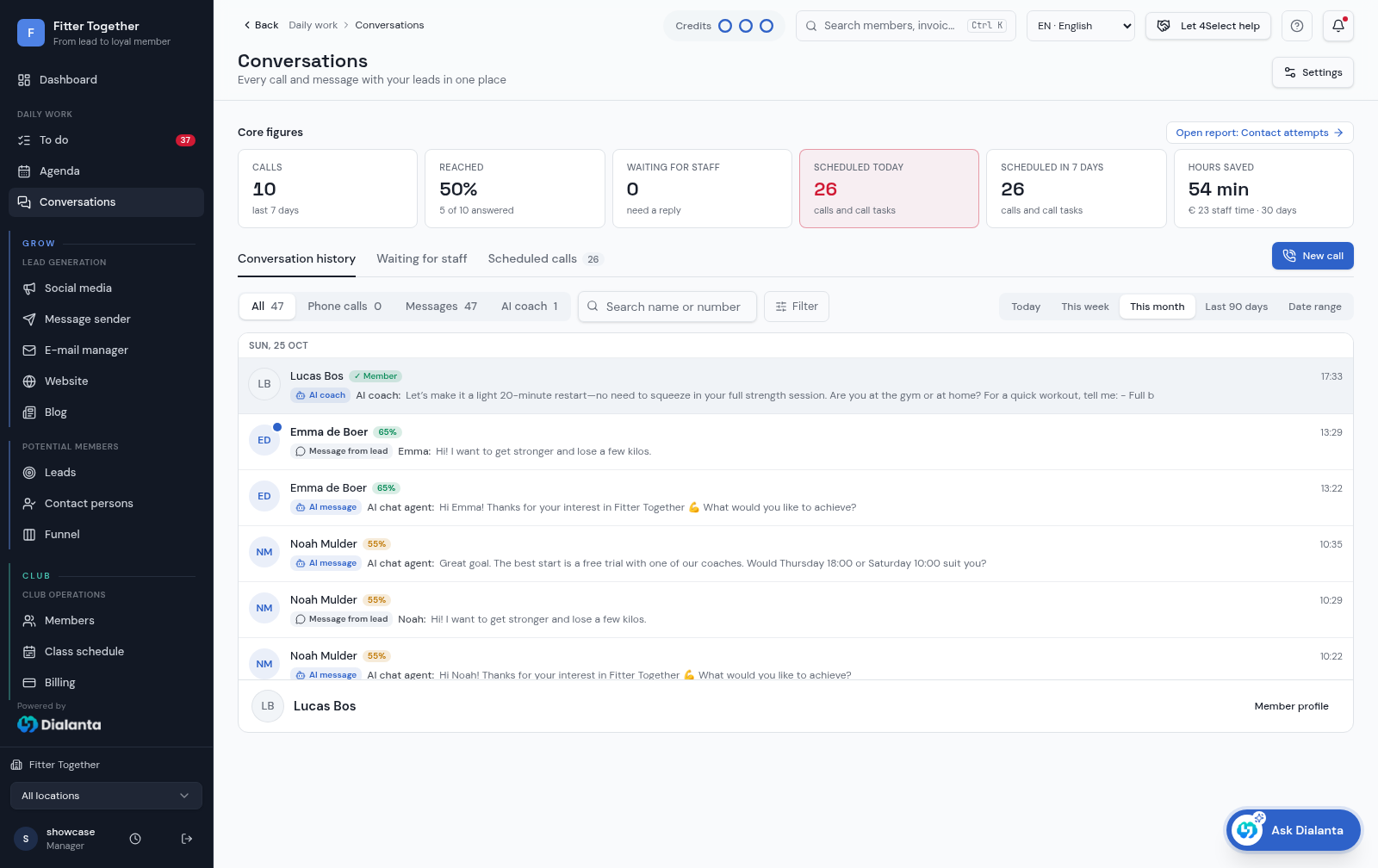
In Dialanta, this is what AI voice agent is for.
Step 1: look at where calls are missed
Start by looking at when calls come in and when your team cannot answer. Evenings, lunch time, busy classes and weekends are common gaps. Knowing the gaps tells you where help is needed.
Step 2: decide what the phone agent may do
An AI phone agent can call a lead when nobody picks up, and answer when the lead calls back. It can book an appointment straight into your agenda. Decide which of these jobs you want it to do.
Start with the simple jobs and add more when you trust the result.
- Call leads when nobody on the team answers.
- Answer when leads call back.
- Book appointments into the agenda.
- Leave a call summary for your team.
Step 3: choose your number and call route
Decide how your team handles calls: your own number, one shared phone or everyone on their own phone. Set a call route so the call goes to the right person first, and the AI helps when nobody answers.
Step 4: read the summaries and recordings
Every call should leave a trace. A summary on the person card tells your team what was said. Recordings and the name of who had the call help you check the quality and coach your team.
Step 5: keep people in charge
AI is good at the first reply and at booking. It is not good at everything. Medical questions, complaints and closing a sale belong to your people. Make sure your team knows when to take over, and review the calls on a regular basis.
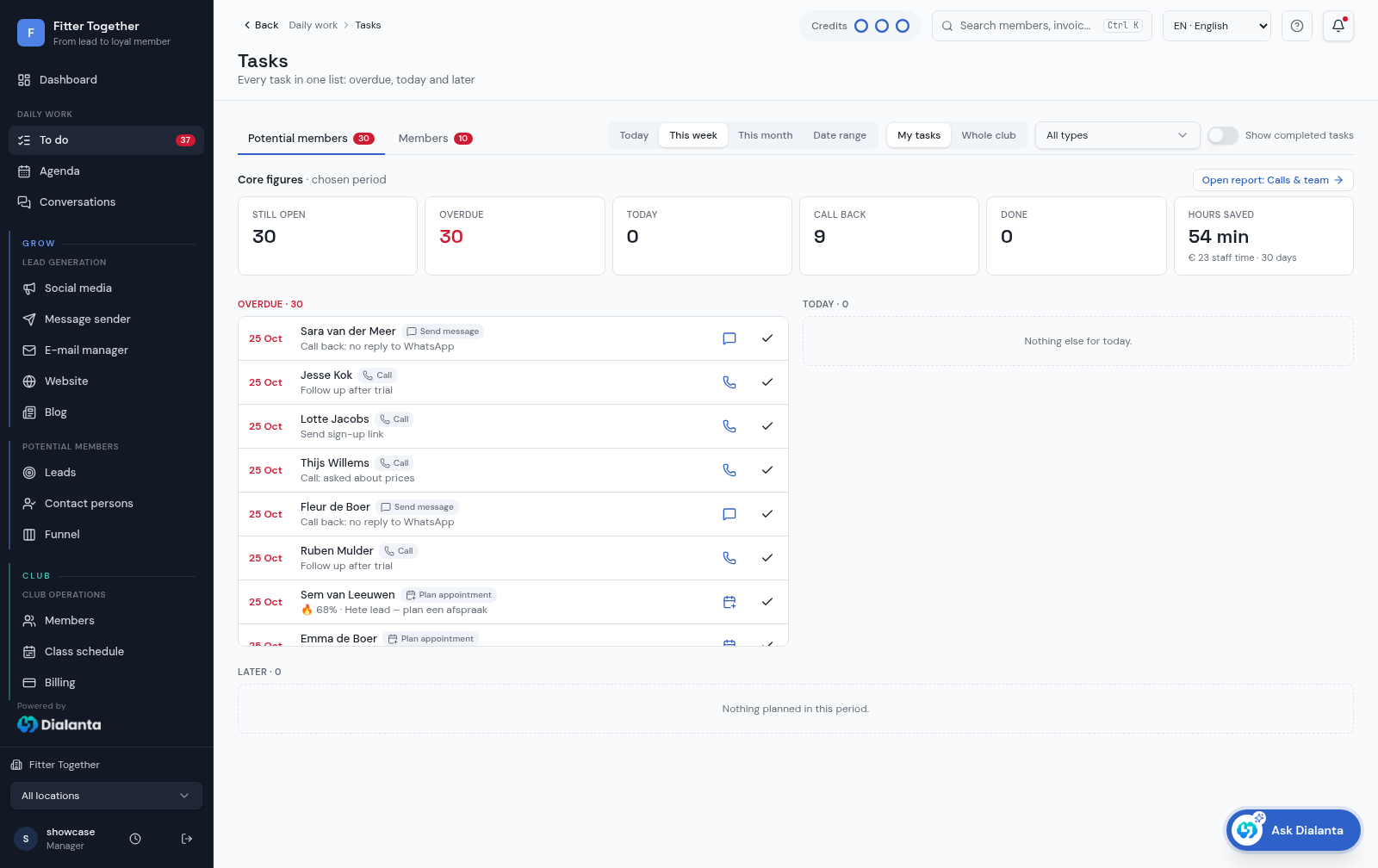
Step 6: follow up after the call
A call is not the end. If the lead booked a trial, a reminder should go out before the visit. If the lead did not book, a message afterwards keeps the conversation open. Put the next step on the person card so nothing falls between two colleagues.
How to start in small steps
You do not need to change everything at once. Start with one gap, for example the evening hours, and let the AI cover it. Read the summaries for a week and see what leads said. Then widen the use to more hours or more jobs.
Tell your team what is happening and why. The AI is there to take work away, not to replace the personal contact that makes your club special.
Common mistakes to avoid
The first mistake is expecting the AI to handle everything. Give it clear jobs and keep people for the rest. The second is never reading the summaries, so mistakes stay hidden. The third is forgetting the follow-up: a call without a next step is wasted. The last is not telling leads what to expect: a short message before or after the call helps them understand what is happening.
Your first week: a quick start plan
On the first day, write down the times when your team cannot answer the phone. On the second day, choose the number and the call route. On the third day, decide which jobs the AI may do: calling leads, answering call-backs and booking into the agenda.
During the week, read the summaries every day. Look for questions that come back, and for calls that needed a person. Use what you learn to improve your answers, and tell your team about the cases where they should take over. After a week, you will know whether to widen the hours or the jobs.
How Dialanta helps
The Dialanta AI voice agent is included in Grow, which costs €399 per month per location.