
AI that helps your team
AI works best on tasks that are repetitive, urgent and clearly defined. In a fitness club that means the work around messages, the phone and writing.
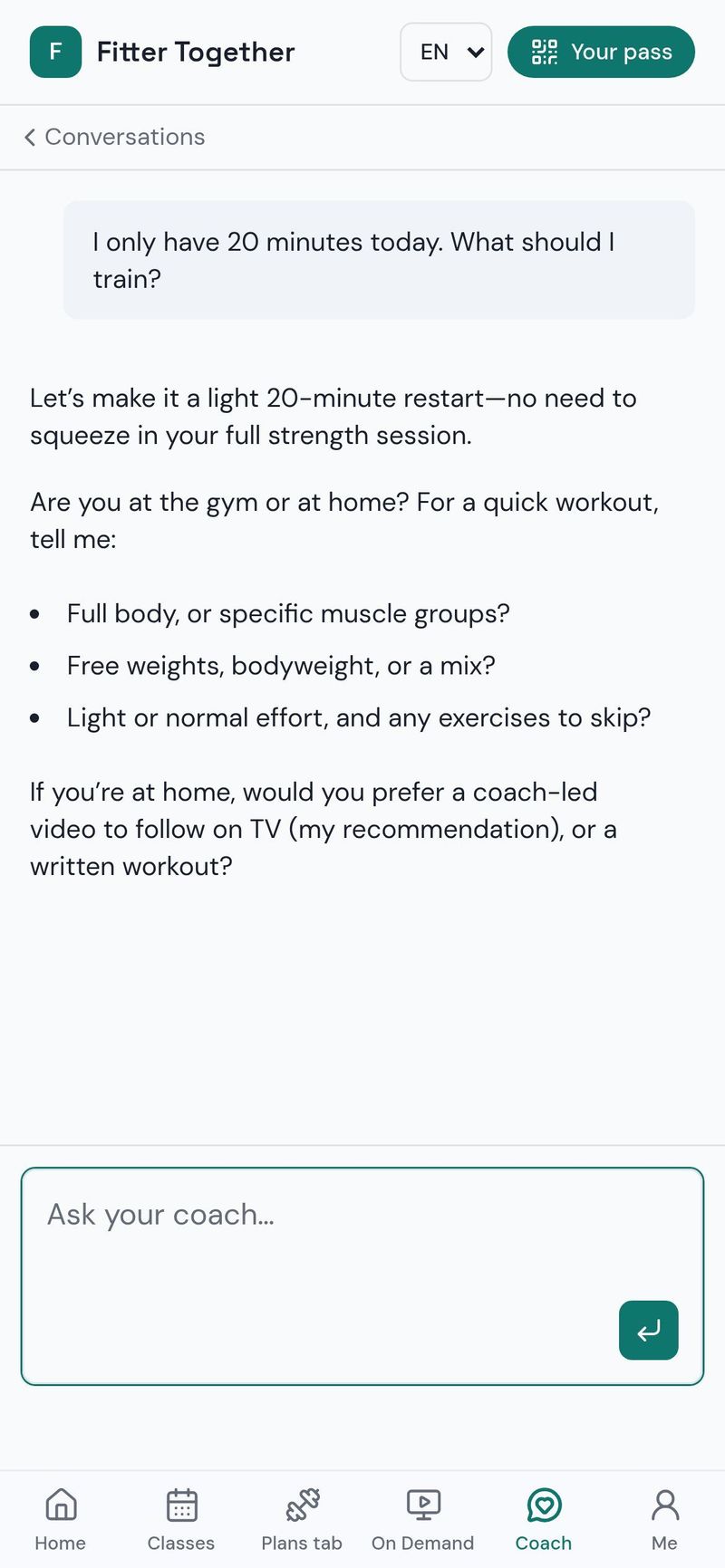
- First replies: answering a new lead within a minute, also outside opening hours.
- Booking: suggesting times and putting a trial or appointment in the agenda.
- Reminders: sending the message before a visit so fewer people forget.
- Writing drafts: preparing social posts, campaigns and answers that your team can review.
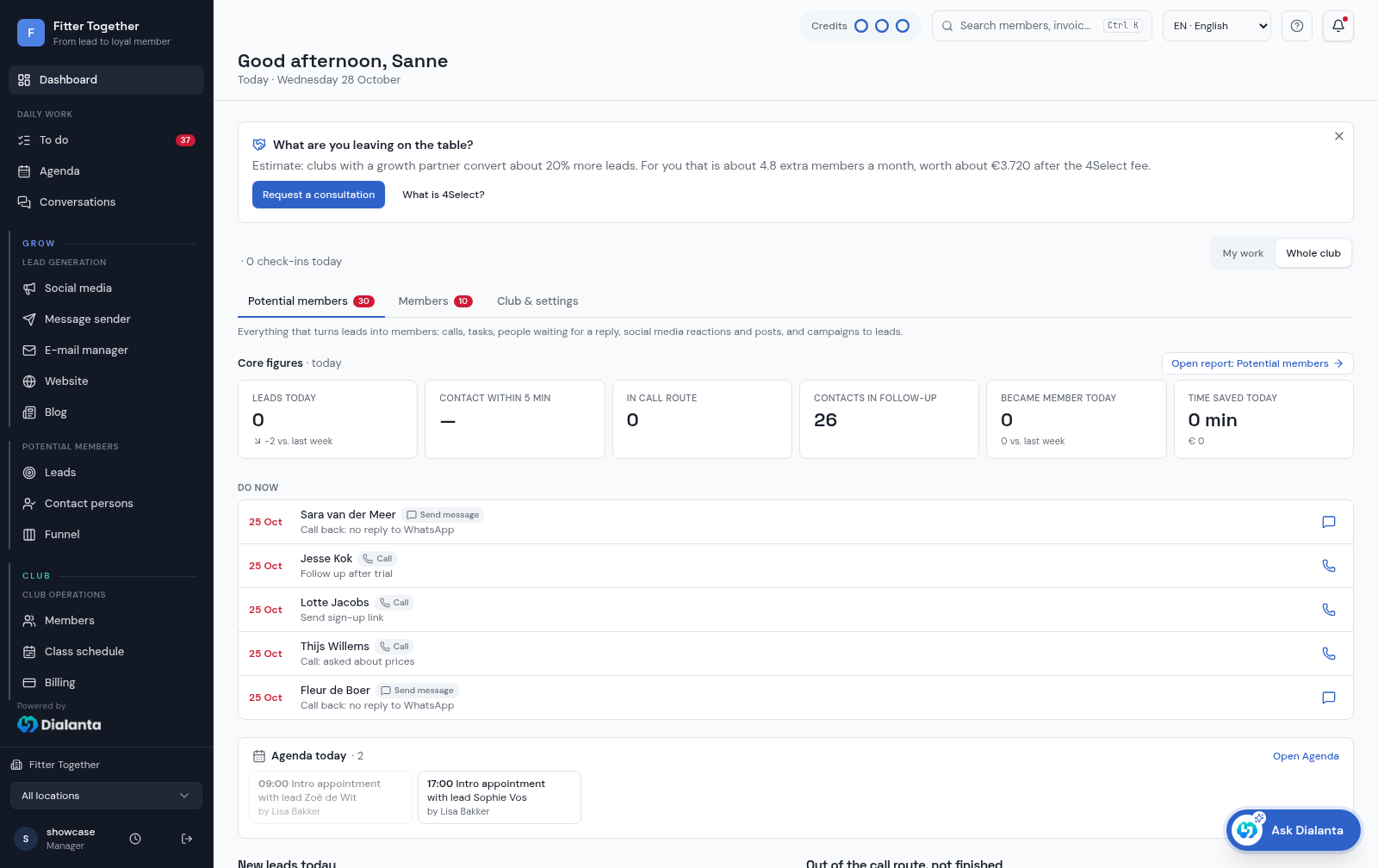
In Dialanta, this is what AI is for.
Where humans stay in charge
Some conversations need a person, because they carry risk or need judgement and empathy.
Medical questions are one of them. Whether someone can train with an injury or condition is not something a club should leave to software. Complaints are another. A member who is unhappy wants to feel heard by a person who can decide how to make it right.
Closing is the third. A sales talk about a membership is about trust. AI can prepare the ground by answering first questions and booking the trial, but your team should have the conversation where the decision is made.
A good setup passes these conversations to your team, with the history attached, so the member never has to explain everything twice.
Preview before anything goes out
Anything AI writes for the public, such as social posts and campaigns, should be checked before it is published. Look at the text, the tone and the facts, and change what does not sound like your club.
Use a preview and approval step, so your team sees the text first and decides when it goes out. This keeps the speed of AI while the club keeps control over its voice and what it promises.
Start small. Choose one task, such as first replies to new leads, check the results for a few weeks and then add the next. Clear rules on what AI may do alone and what it hands over make the team trust it faster.
Start with the first reply
The first reply is the easiest place to begin. A new lead writes at night, the AI answers with a useful message and offers a trial, and your team sees the whole conversation in the morning. Nothing is lost, and nobody had to stay awake.
Read the first conversations yourself. Check the tone, the facts and whether the next step was clear. Adjust the rules until the answers sound like your club.
Set clear rules for what AI may do
Write down what AI may do on its own, what it may only prepare and what it must always hand to a person. For example: it may answer opening hours and book trials, it may draft a campaign for review, and it must pass medical questions, complaints and sales talks to your team.
Share these rules with the whole team. When people know where AI stops, they trust it more and use it better.
Keep measuring
Look at the results every few weeks. How fast are leads answered, how many trials are booked and which conversations were passed to a person? Use this to widen the rules step by step, or to tighten them where something went wrong.