

The first minute matters
Someone who fills in a form on your website is thinking about training right now. A few hours later they are back at work, in a meeting or looking at something else. The interest is still there, but the urgency is gone.
People also rarely contact only one club. They send a message to a few gyms nearby and wait to see who answers. The first useful answer usually wins the conversation, because it arrives while the visitor is still engaged and has not yet compared prices or opening hours.
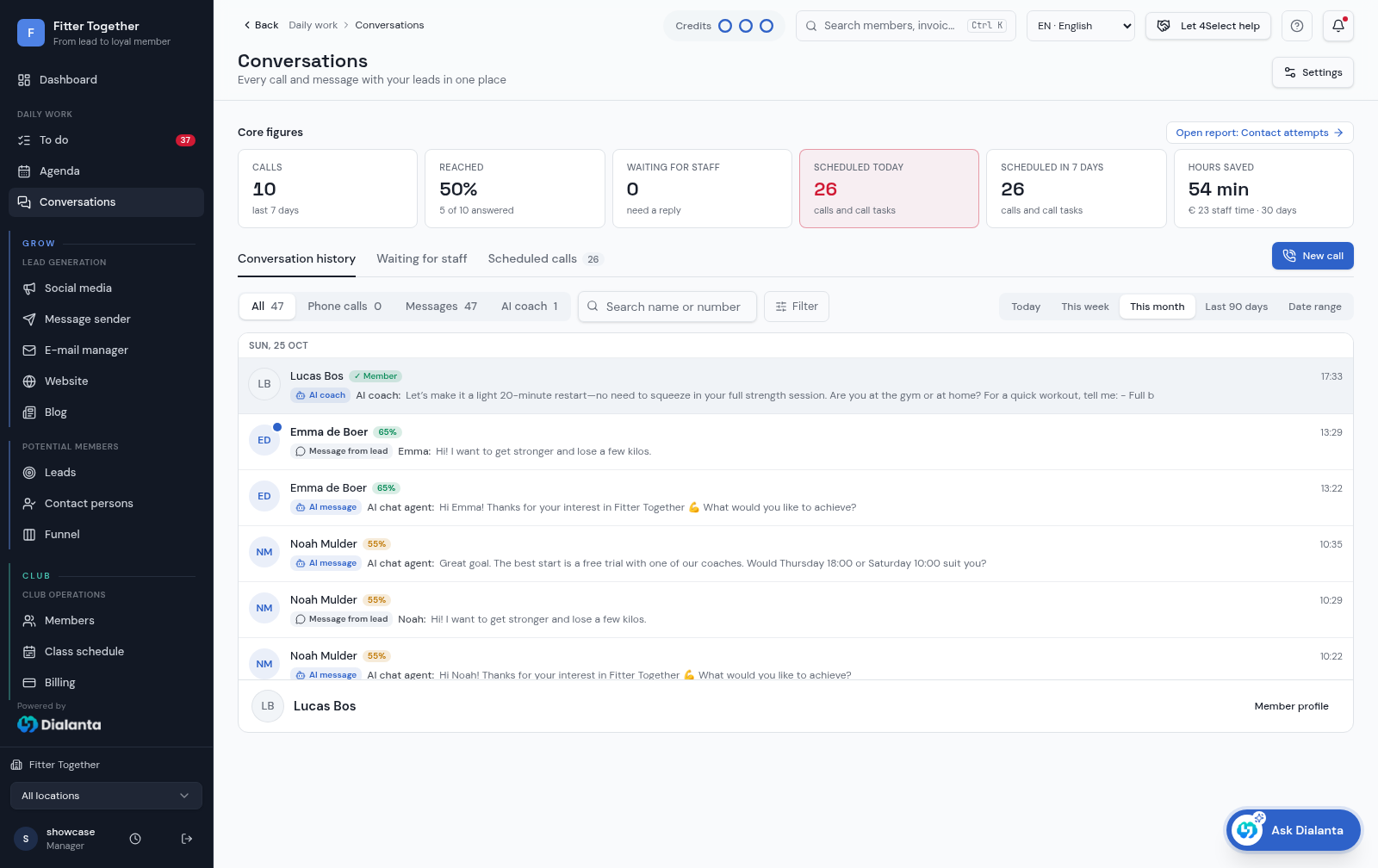
A useful answer is more than an automatic receipt. It greets the person by name, answers the question they asked and suggests a next step, such as booking a trial. Speed only works when the message is also relevant.
In Dialanta, this is what Leadmanager is for.
Message first, then call
A phone call is personal, but many people do not pick up an unknown number. A message is easier to notice and to answer when it suits them. For that reason, start with a message and follow with a call.
A good order looks like this:
- Send a short message right away, on WhatsApp where possible, with a clear question or a trial suggestion.
- Call shortly after, so the lead hears a real voice and can ask questions.
- If there is no answer, leave a short message and try again at another time of day.
Nights and weekends
Many people think about joining a gym in the evening or at the weekend, when your team is not at the desk. If the first answer only comes on Monday, other clubs have already replied.
AI can cover these hours. It can send the first reply, answer common questions and book a trial in the agenda, so the lead gets a useful response at any time. Questions that need a person are passed on to your team, with the whole conversation visible, so nobody has to ask again.
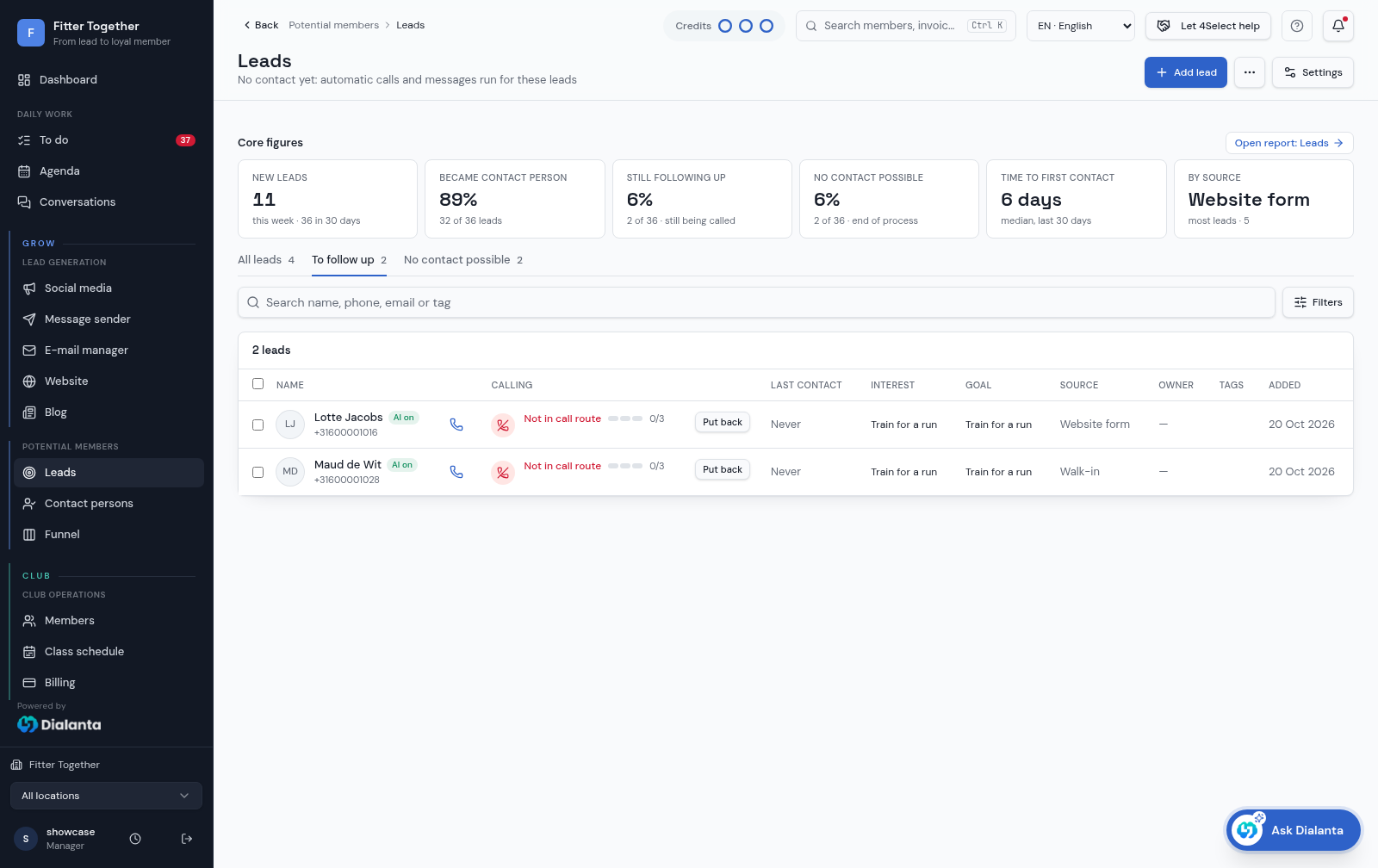
Finally, track response time. Measure how long it takes from a new lead to the first reply, and look at it per source and per time of day. Gaps, such as slow evenings or weekends, show exactly where leads are lost. What you measure, you can improve.
What to say in the first message
Keep the first message short and human. Use the person's name, answer the question they asked and offer one clear next step, such as a trial. Avoid long texts and avoid pushing a price before the person has said what they want.
Ask a simple question at the end, so a reply takes seconds. A message that is easy to answer gets answered more often.
Make follow-up a routine
Speed comes from a routine, not from heroics. Decide who answers new leads, which tools they use and what happens when nobody is at the desk. Write it down so the whole team follows the same steps.
Review a few conversations every week. Look at how fast the first reply was, whether the lead got a useful answer and whether a trial was booked. Small changes, such as a better first line, add up over time.